
Strategic
Communication
At Murdoch…
At Murdoch, our Strategic Communication students learn how to strategically communicate and engage with various stakeholders and audiences. They develop digital and traditional communication skills while learning how to apply those skills in a range of contexts, from web communication to social media to creative production and news media. Students get to work with real clients on real campaigns in our on-campus student creative consultancy, MESH, as they build a wide range of skills for professional communication in the digital age, including creating and producing content, managing social media and developing public relations and communications strategies.
Our Student’s Work
This year, we had the privilege of working for Professor Jennifer Verduin, Pro Vice Chancellor of the College of Environmental and Life Sciences at Murdoch University across two units; COM307 Campaign Management and COM306 Specialist Communication.
COM306
Specialist Communication
Explores professional communication as applied to a range of societal and practical contexts including health and science. Students will interrogate the critical issues associated with the complexities of communicating in these industries from a local, national and global point of view.Including the role of communication in indigenous issues in Australia. Students will develop research and practical skills by working on real-life projects from within and outside of the University and with industry and research experts.
COM307
Campaign Management
This unit consolidates professional strategic communication skills through practical experience with a ‘real life’ organisation. Working in teams, students develop a communication plan for a not-for-profit organisation over the course of the semester, culminating in a formal conference presentation to the organisation, students and mentors. Students learn about strategy development, client management, program research, planning, design and evaluation as well as budgeting and scheduling.
Antarctic Climate Change Communication
The Challenge: Antarctica – Where all oceans meet
Professor Verduin, an oceanographer from the College of Environmental and Life Sciences, recently embarked on an expedition to Antarctica with more than 100 other female researchers and scientists as part of the Homeward Bound women in STEMM leadership initiative. On the trip, Professor Verduin took many pictures and videos of the polar icecaps, penguins and seals as well as the human remnants of whaling and exploration on the snow-covered land. Her journey underscored to her the importance of raising awareness about Antarctica’s pristine environment so that it can continue to be carefully protected for future generations.
Background and Context
Antarctica is an amazing continent with its huge diversity of marine life; some even regard it as the last “pristine continent” on earth (Hwengwere et al 2022). Yet, from the nineteenth century, human exploration, including whaling, has left the land and ocean strewn with waste and rubbish. As Professor Verduin (2025) wrote in her article for The Guardian, “While wildlife is slowly recovering, these species now face a new threat: climate change. Rising ocean temperatures are melting ice, reshaping habitats and disrupting the delicate balance of life.”
Alongside climate change is the increasing threat of human made waste and rubbish, including microplastics, in the ocean. Microplastics, such as nurdles (plastic resin pellets, see McVeigh 2025), that enter the ocean may find their way to Antarctic waters via the intersecting ocean currents that circulate around it. Sadly, as Lacerda et al (2025) have noted, plastic pollution has been detected in Antarctica’s “waters, sediments, sea ice and biota”.
Another potential impact is the increasing number of tourists who journey to Antarctica each year. Antarctic tourism has grown from an estimated 8000 visitors in the 1990s to nearly 125,000 in 2023-2024 (Gibson 2025). Under the Antarctic Treaty (signed in 1959), signatory countries respect that Antarctica “be used for peaceful purposes only” including scientific research and tourism (Secretariat of the Antarctic treaty 2025).
Tourism certainly opens Antarctica to people wishing to experience its amazing wonders and recognise the unique importance of its biodiversity, however growing numbers of tourists will inevitably bring increasing risks and concerns. As Senigaglia et al (2025) stated in their discussion of the management of Antarctic tourism, “Antarctica may be in danger of joining other globally iconic destinations which have been reportedly loved to death” (2). Careful ongoing stewardship of tourist visitors will be required to balance the need for public accessibility to learn about this amazing place against the need to protect Antarctica for generations to come.
The Campaign Management [COM307] Brief:
Working in MESH Consulting teams, you will develop a strategic communication plan based on a client’s needs. The plan will be presented to the client as both a written report and as an oral presentation at the annual Campaign Management conference, MADCamp 2025 (Make a Difference Camp) in Perth, Singapore and Dubai. Teams will need to develop appropriate communication objectives and performance indicators in response to the information their client provides and from their own independent research.
The Specialist Communication [COM306] Brief
Working individually, your task is to undertake background research, develop a set of communication recommendations and produce one creative artefact for this year’s MESH client. Your creative artefact will be designed to assist the organisation or individual in communicating a particular message in relation to the chosen issue.
COM307 CAMPAIGN MANAGEMENT 2025: Student Conference

MESH provides a collaborative space for students from across the creative arts and communication disciplines at Murdoch University to showcase their work and develop real consulting experience.

The Madcamp Conference is the culmination of the semesters’ work for the students in Perth, Singapore & Dubai, where they conduct research and come up with an original strategic communication plan that addresses some of the concerns and challenges the clients face.
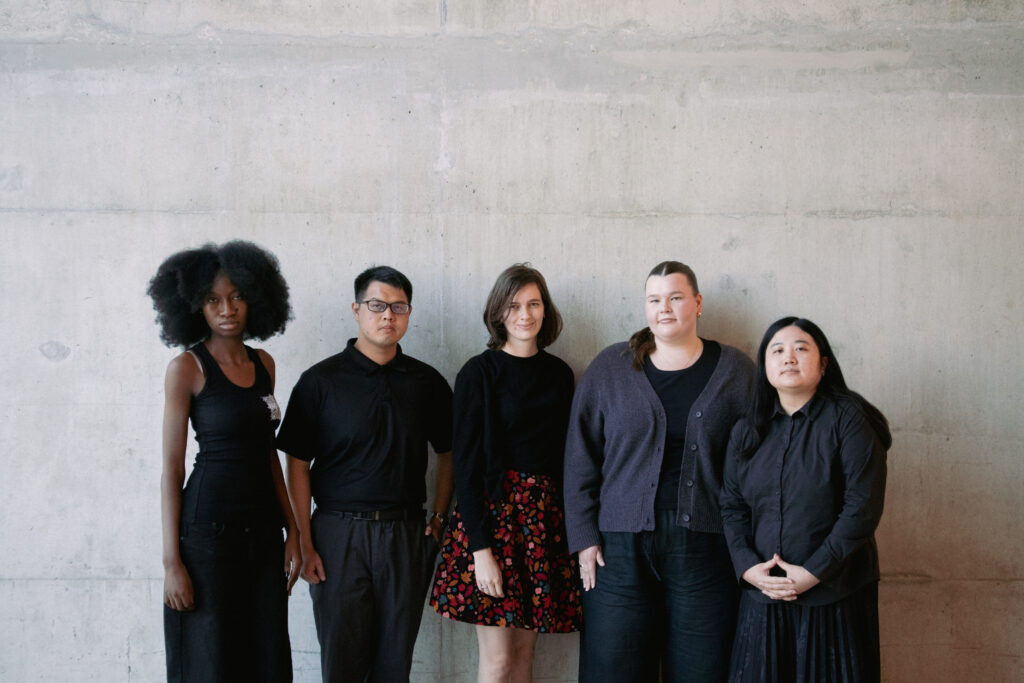
Team Modern MESHaging
Esther Adegboye, Joseph Lim, Mia Forrest, Tayte Miers and Julie Tran
Modern MESHaging is a communications consulting team that strives to deliver impactful messages in creative and engaging ways. A team of communication students with a clear shared vision: To develop effective campaigns that inspire real-world changes for our clients. Working under Murdoch University’s MESH consultancy group, Modern MESHaging hopes to deliver work that suits the modern communications landscape.
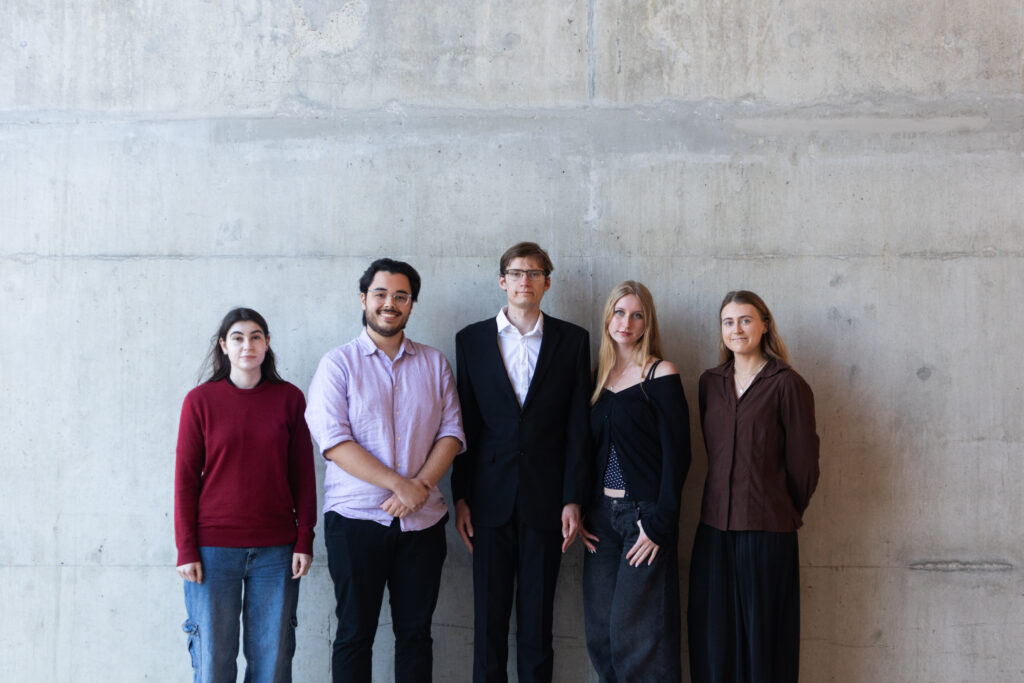
Team sMESHed Avo
Shannon Dempsey, Jonathon Leech, Wyatt Siekman, Ava Peacock and Amber McBride
Team sMESHed Avo is a highly motivated collective of Murdoch University students working together to develop campaigns that are both efficient and stylish. We have backgrounds and experience in a variety of web communication tools, including campaign management, public relations, graphic design and video production. So put a slice of us on toast because when you choose us, we’ll avocaDo!
‘Penny the Penguin’ from COM307 Campaign Management
Student Name: Tayte Miers
Penny is the primary mascots for a primary school engagement campaign aimed at educating young Western Australians on keeping Antartica, its flora, fauna, land and and ocean free from rubbish.

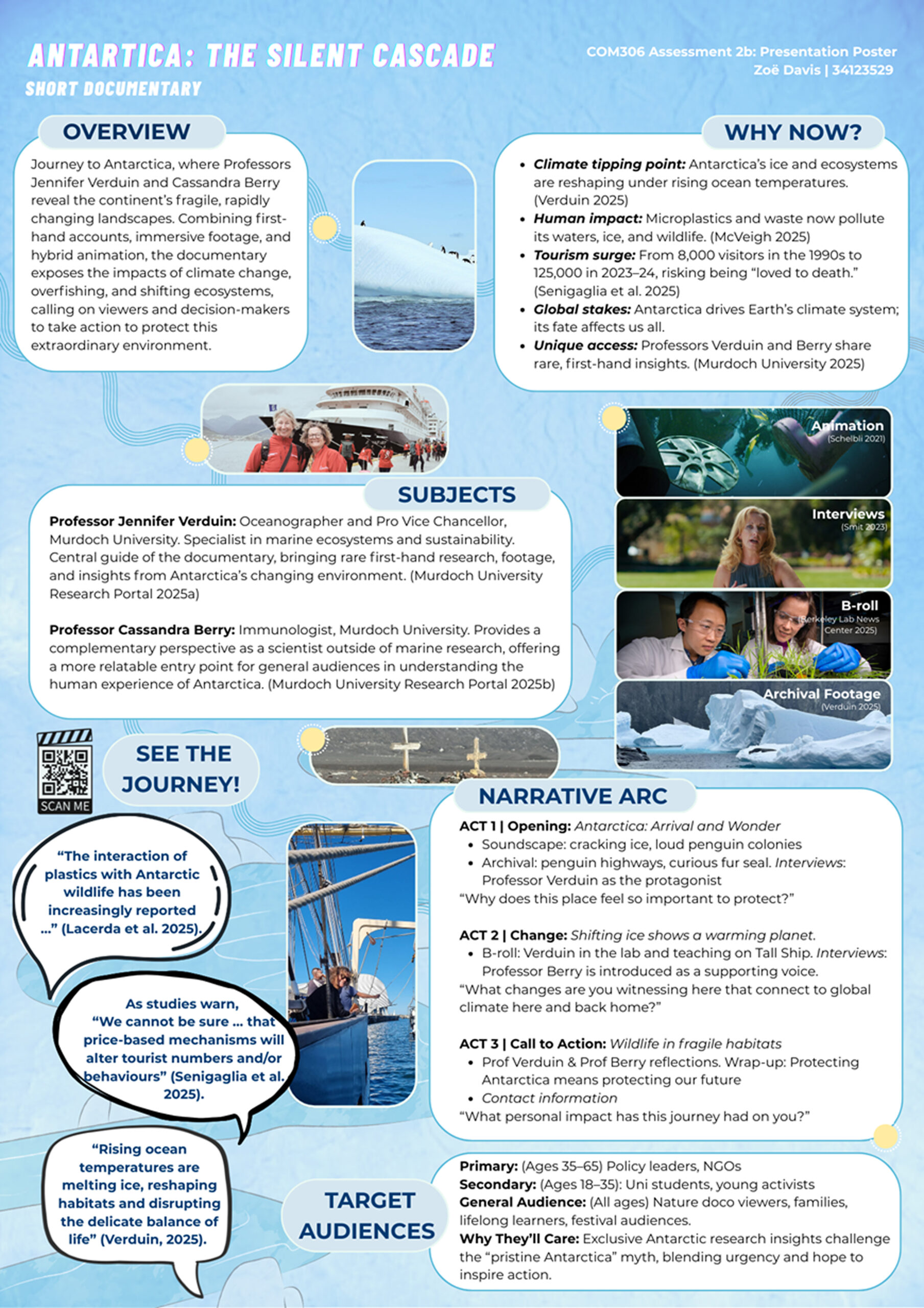
COM306 Specialist Communication Artefacts
Student Name: Zoe Davis
Student Name: Shannon Dempsey
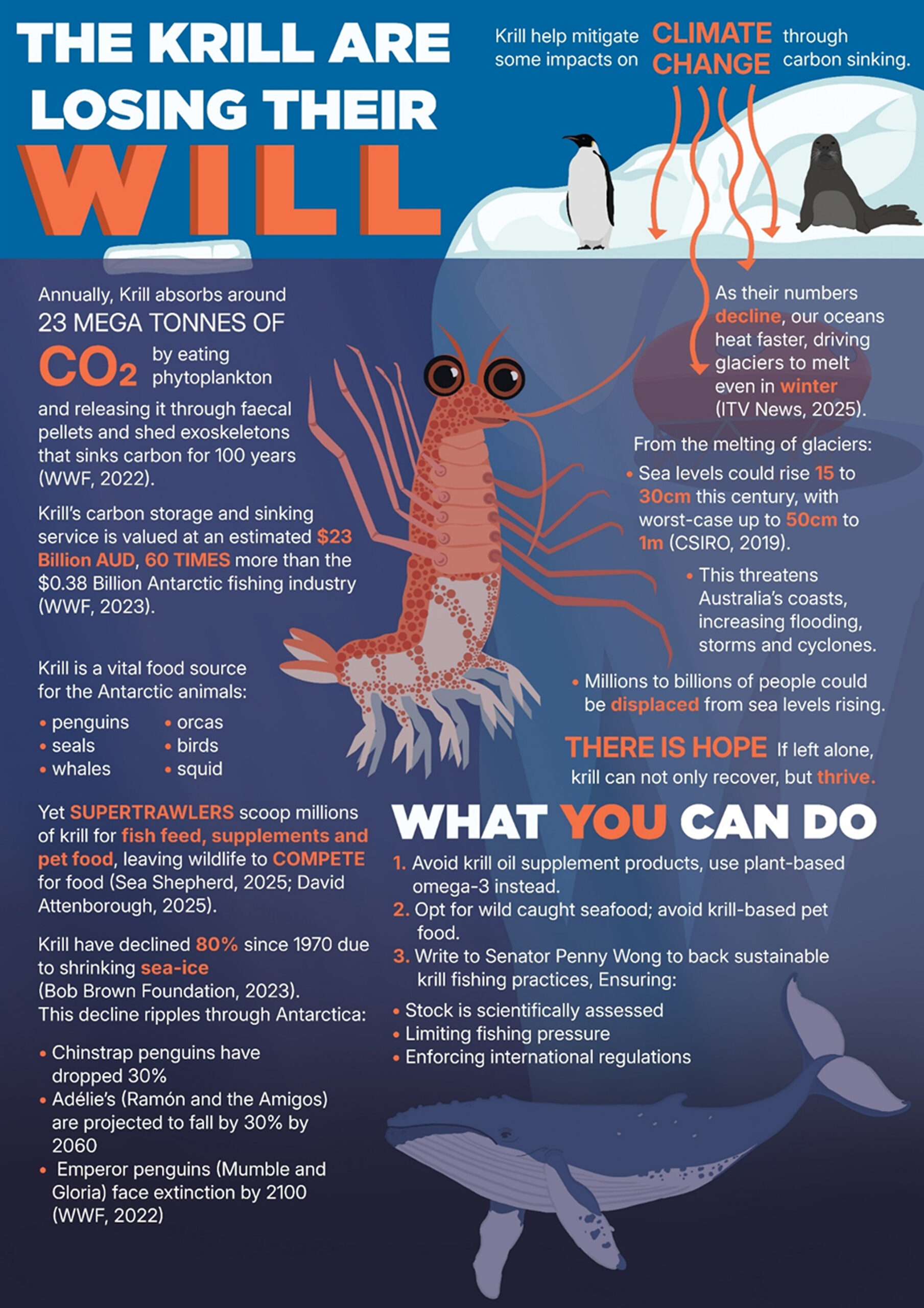
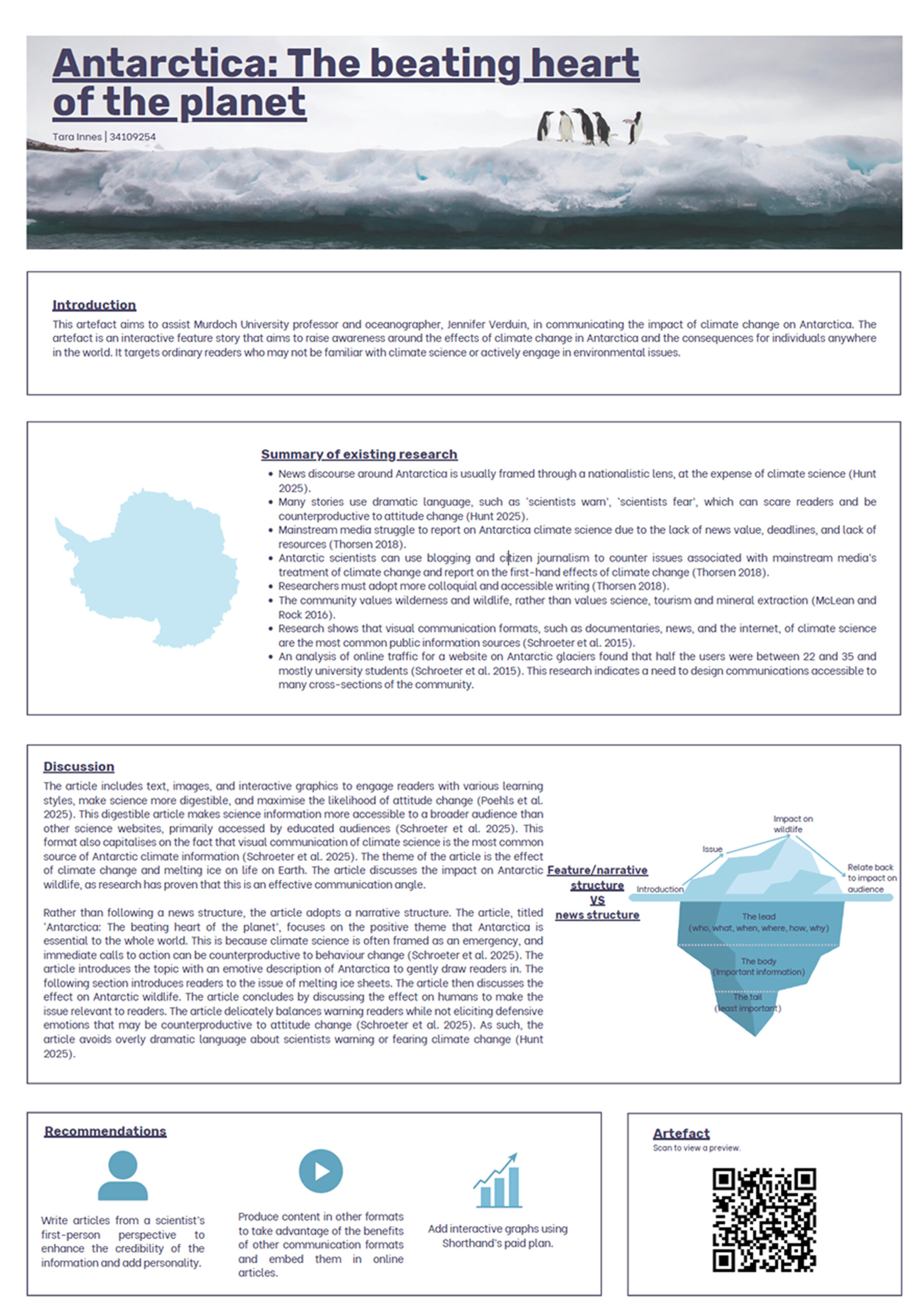
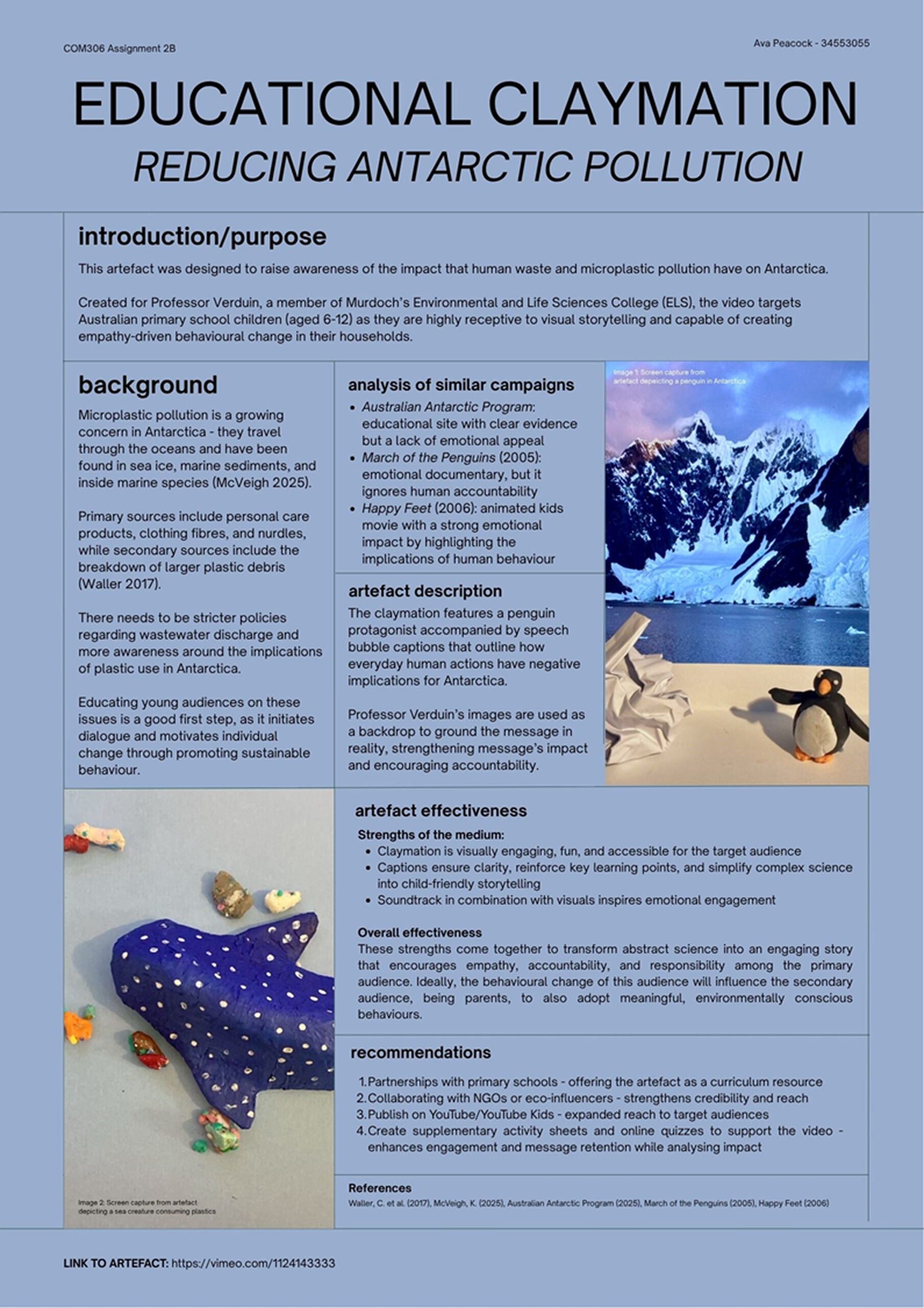
Student Name: Thalia Marsic
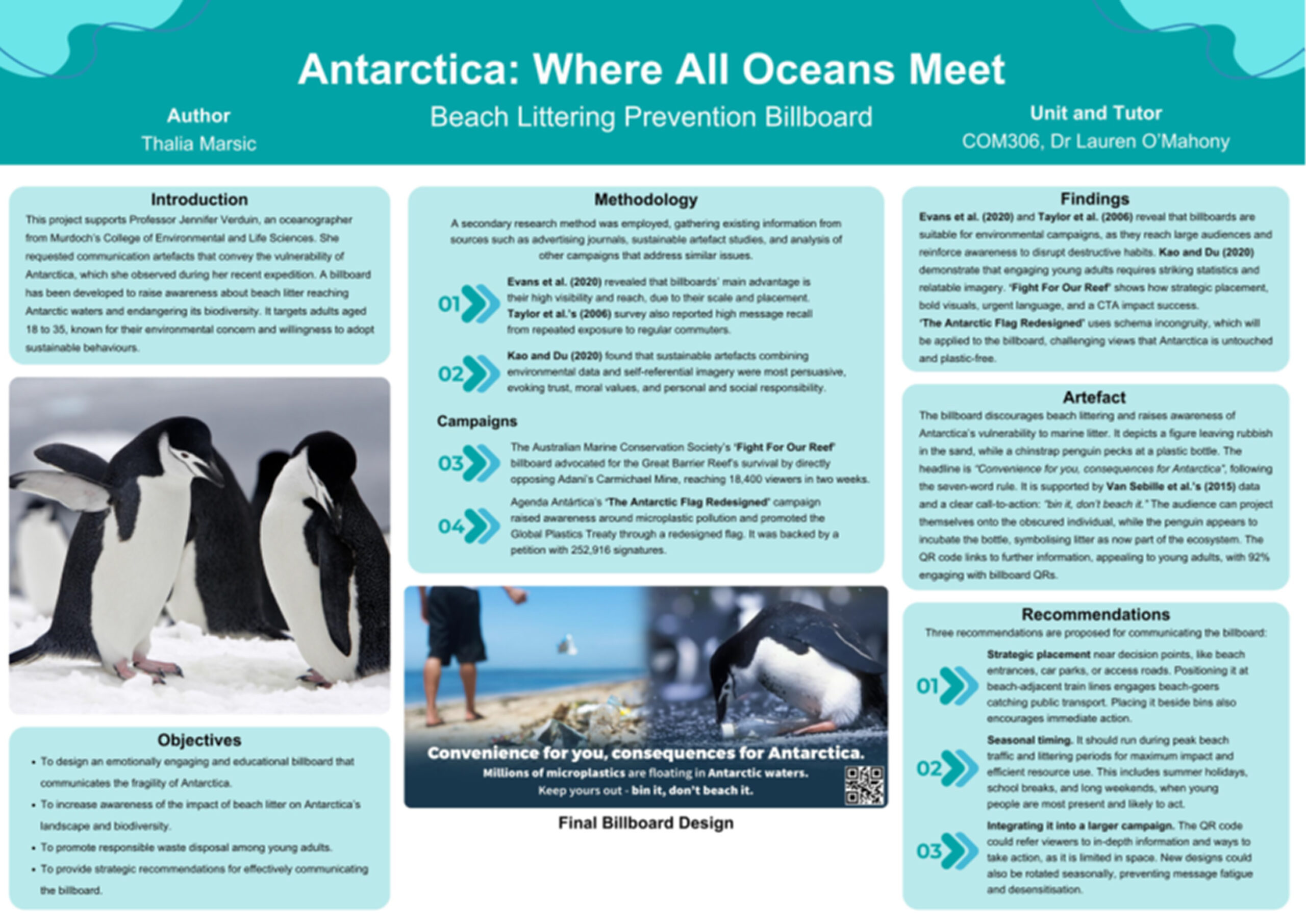
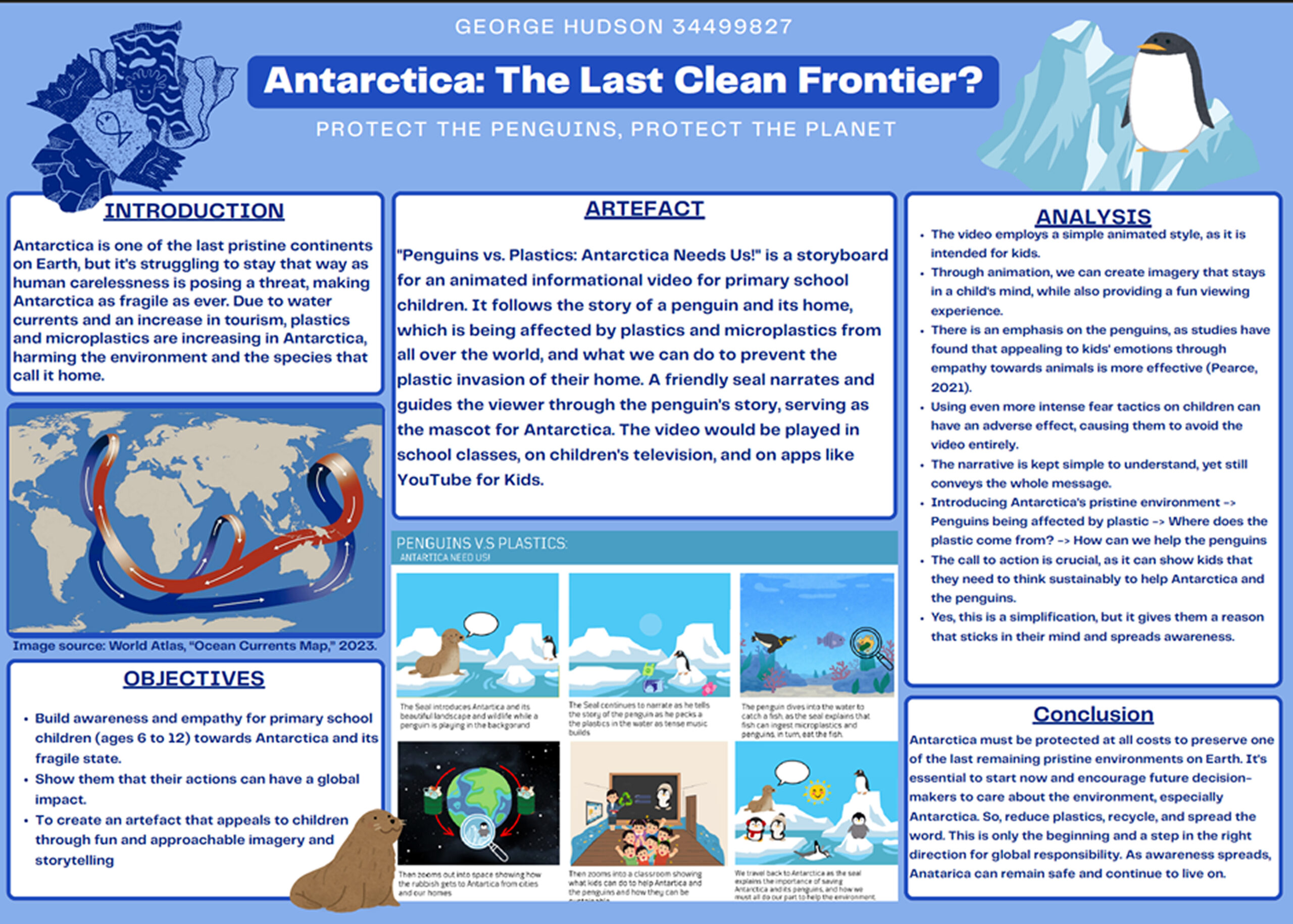
Student Name: George Hudson
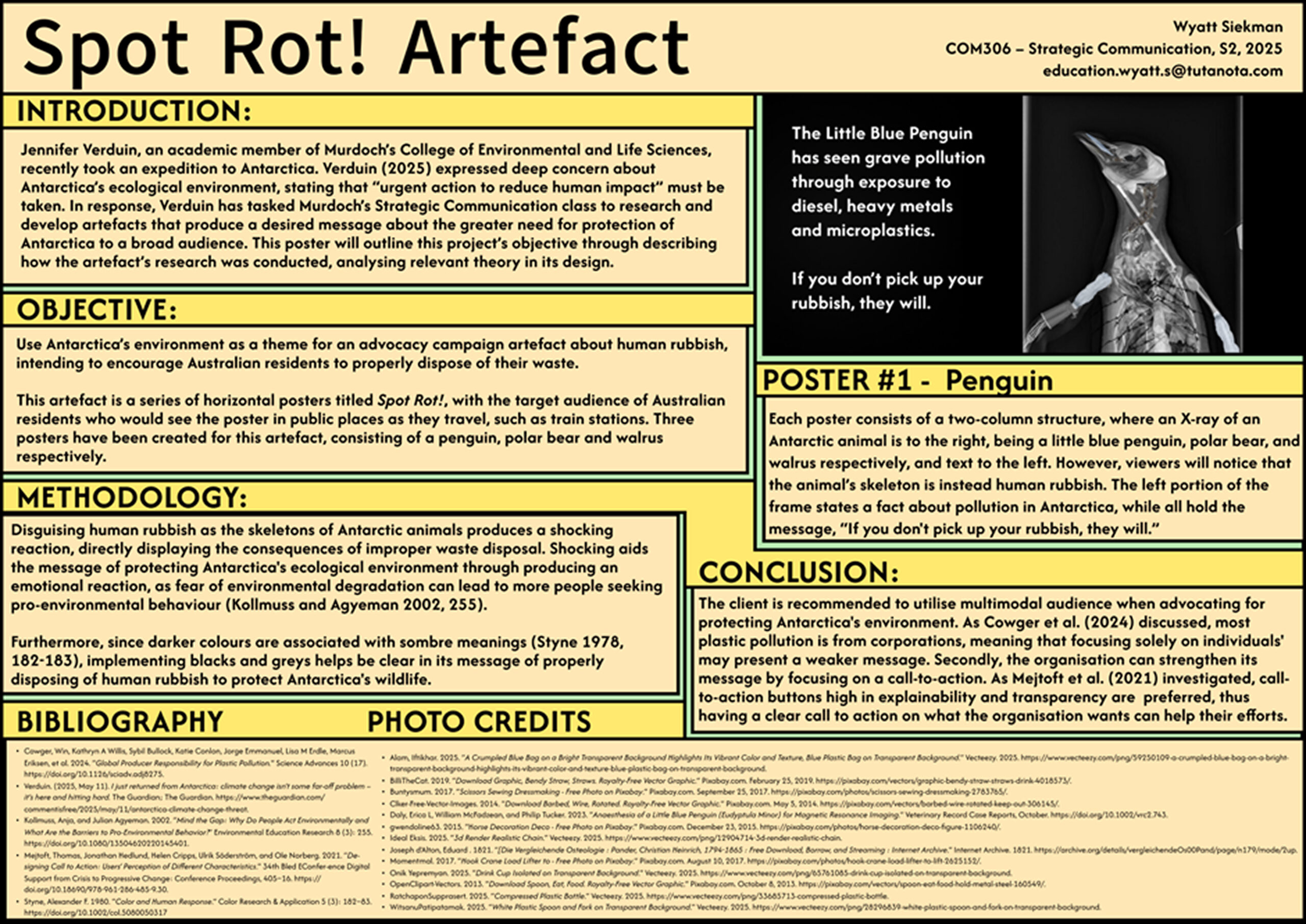
Student Name: Wyatt Siekman
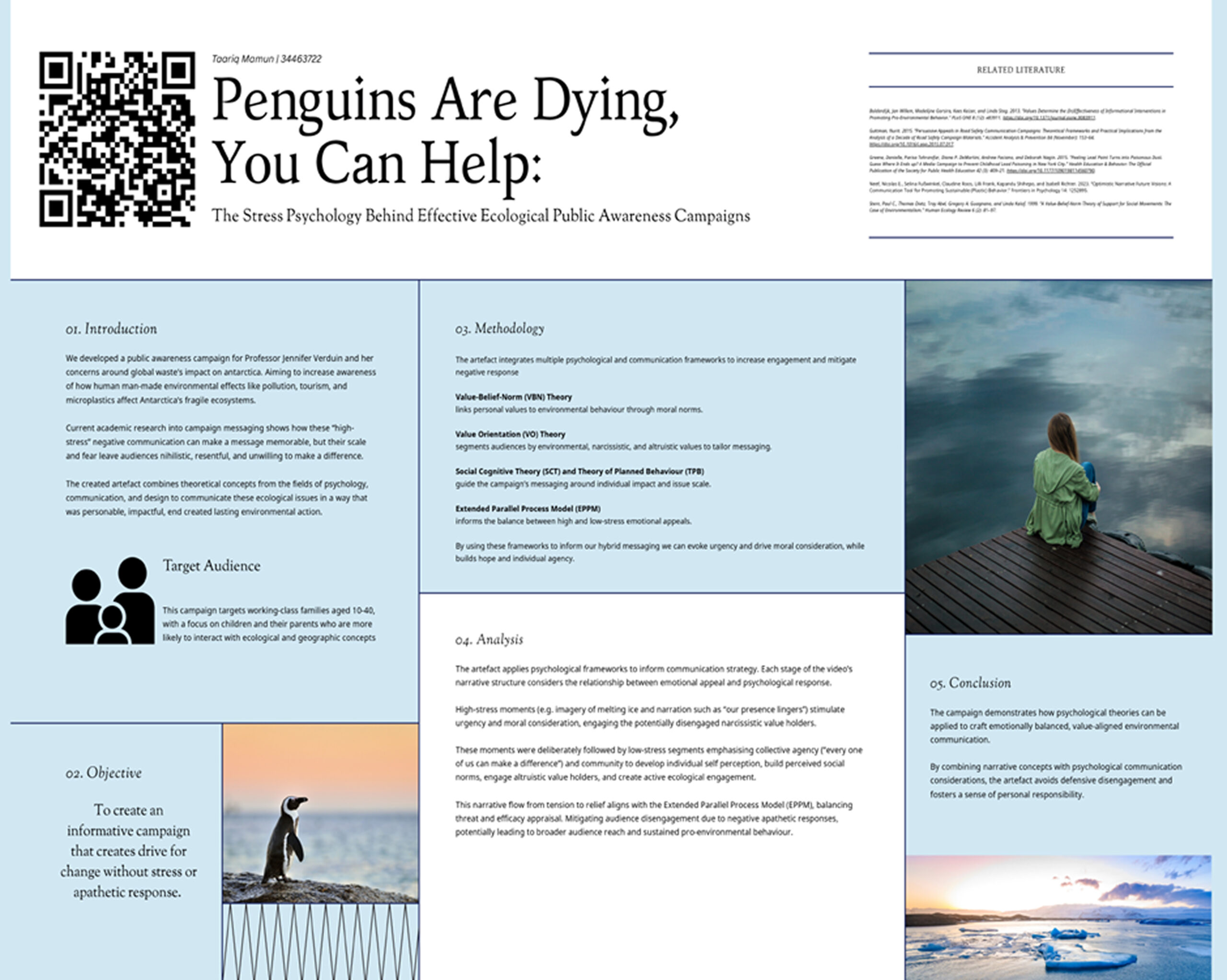
Student Name: Taariq Mamun
Video Artefact, COM306 Protect Antarctica Campaign: Protect Our Future: https://youtu.be/-S0nNi7QC4c?si=BMpA6FMAtF_ZrxLM