
Design
Thinking
At Murdoch…
Design thinking includes the process of researching, prototyping and evaluating service systems for complex commercial and social problems. It’s about redefining complex problems and engaging experimental approaches to broaden thinking and better understanding users during project stages. Empathy, along with a critical mindset, is crucial for examining issues, generating ideas and developing strategies.
Our Student’s Work
City of Kwinana: Street by Street
During our Certificate of Design Thinking, we had the opportunity of working with the City of Kwinana to explore connections between people at a neighbourhood scale. This certificate allowed us to employ a mix of critical thinking and creativity to re-evaluate problems and generate innovative ideas for improving services and solving complex business challenges. In this case, we explored the question: How can we connect community’s street by street?

This project was completed by the GRD504 students in collaboration with the City of Kwinana and their Street-by-Street program. The council presented us with the following question: how can we connect communities street by street?
Our goal was to approach this question using the design thinking methodology to generate human-centred an innovative solutions that increase connectedness between the consituents in Kwinana.
We propose that the City of Kwinana embeds a clear goal into their communications strategy: to reshape how local government is viewed by developing targeted, micro-level messaging that builds the council’s reputation as a proactive, resident-focused advocate. This plan should include co-design and help people share how they want to be communicated.
OUR MISSION
This objective stems from the City of Kwinana’s original research question for the project, which challenged us to discover “how can we connect community’s street by street?” Our project goal is to enhance the community building aspect of the Street-by Street program and create concepts that sustain resident’s relationships and improve their perception of the council. This statement aligns with the objectives set out in the City of Kwinana’s Strategic Community Plan for 2025, which was written in collaboration with the City’s residents. By co-designing with council members and residents, we aim to create a better-connected Kwinana that fosters a greater sense of safety and wellbeing, by breaking down barriers and apprehensions that stop people from forming relationships with their neighbours.
this is in collaboration with the city of kwinana’s vision for:
“a vibrant and inclusive community that leads with innovation and sustainability, where our unique identity and strong reputation makes kwinana a place you’re proud to call home.” (city of kwinana, 2025)
OUR value
city of kwinana value the engagement and sustainability of the people of kwinana and are working toward creating a better sustainable and connected kwinana.
DESIGN TEAM MEMBERS
This project was undertaken by a total of eleven members, divided into two teams. These groups consisted of interdisciplinary members with backgrounds in various fields, particularly specialising in Communications and Graphic Design. While this project report was constructed by the Design Team, the research was developed collaboratively by both collectives.
A special thank you is extended to Lulu Chepkorir Langat Langat, Tenzin Dema, Caroline Jematia, Gyem Thinley, Tshering Dorji, and Sonam Rinzin, the members of our adjacent team
Zara Blight, Jayden Tierney, Thisari Dharmaratne, Madison Campbell

THE PROJECT
The City of Kwinana approached Murdoch University to engage within their Street-by-Street project towards the end of 2025, working with the students from within the Design Thinking postgraduate certificate. From their initial pilot in 2023, the Street-by Street is an initiative that brings neighbours together while improving aesthetics, biodiversity, safety, and waste education (Love My Kwinana, 2025).
wicked problem
Partnering with the City of Kwinana and looking into their research question ‘how can we connect community’s street by street?’, we have begun to explore community development, particularly community engagement and building relationships at a neighbourhood level. This research has been framed within the Design Thinking methodology, a research method that pulls from the tools of designers, utilising the human-centred approach to discuss the interpersonal and delicate relationships between people, their experiences, and how they interact with their surroundings – including others and their local government. A wicked problem is a term first coined by Rittel and Webber (1973) and described as a problem with characteristics such as having no definitive formulation, no stopping rule, no immediate or ultimate solution, and being considered a symptom of another problem. It is a term that has been adopted by the Design Thinking framework, as Design Thinking is typically an approach used for addressing complex problems. In this project with the City of Kwinana, we are addressing the wicked problem of;
Why are people currently
disengaged from their communities?
aligning with United Nations (UN) Sustainable Development Goals (SDG)
the objectives for the city of kwinana, guided by the sdg, are outlined as follows “strategic community plan” (2023, p. 7);
- A naturally beautiful environment
that is enhanced and protected; - A resilient and thriving economy
with exciting opportunities; - Infrastructure and services that are
sustainable and contribute to health
and wellbeing; - A unique, vibrant and healthy city
that is safe, connected and socially
diverse, and lastly; - Visionary leadership dedicated to
acting for its community.
To align our research within these goals and measure the value of improving community connection street-by-street, we have guided our research with the following SDG goals;
- Goal 3: Good Health and Wellbeing: By building social connection, pride in the community, and a sense of community to positively impact mental health and overall wellbeing.
- Goal 11: Sustainable Cities and Communities: This goal encapsulates making cities and human settlements inclusive, safe, resilient, and sustainable. Connecting urban environments through relationship building supports inclusive communities that can look out for one another.
- Goal 16: Peace, Justice and Strong Institutions: Community engagement encourages a sense of social justice and civic responsibility through a fostered feeling of belonging and cohesion.
expanded street-by-street
Due to the limited scope of this project, we decided to develop the Street-by-Street program further, as it is already operational by the City’s council, rather than create a brand new initiative that would require further research, council consideration, and community feedback. By making a few modifications, Street-by-Street will continue to provide effective waste education alongside enhanced community building aspects that bring neighbours in the City of Kwinana closer together.
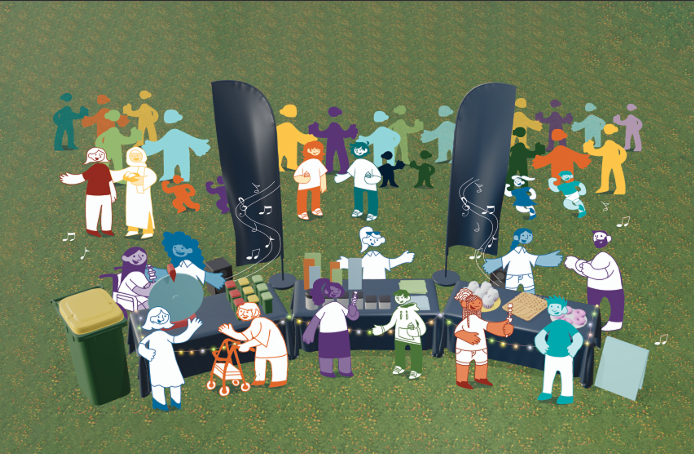
We propose that Street by-Street add three new aspects: music, lighting, and food sharing. During the ideation phase, we realised that atmosphere can be essential to encouraging people to gather. Lighting can help to direct people’s gaze to what is most important at an event and set different moods (Halsey, 2010). Also, although the ice-cream truck music helped to attract many people to the event, we noticed that some people did not stay for the duration of the event afterwards. When it turned off, it felt quite jarring in the sudden absence of sound, and we realised we could talk to each other much more easily. Sound is an important consideration when designing events. Instead of ringing the ice-cream truck, we propose that Street-by-Street has a playlist of music and fun lighting, such as fairy lights, to attract residents to the event.
Additionally, sharing food has been found to generate trust between people and bring communities closer together (Dunbar, 2017, p.198). If we encourage people to bring a plate of food, they may stay longer at the event and generate more conversations between neighbours. It is also a way of sharing culture and interests, such as if people bring food from other countries or a passionate baker makes their favourite recipe. We propose that at each Street-by-Street event, another table is set up where residents can put their plates of food to share.
kwinanna konnect
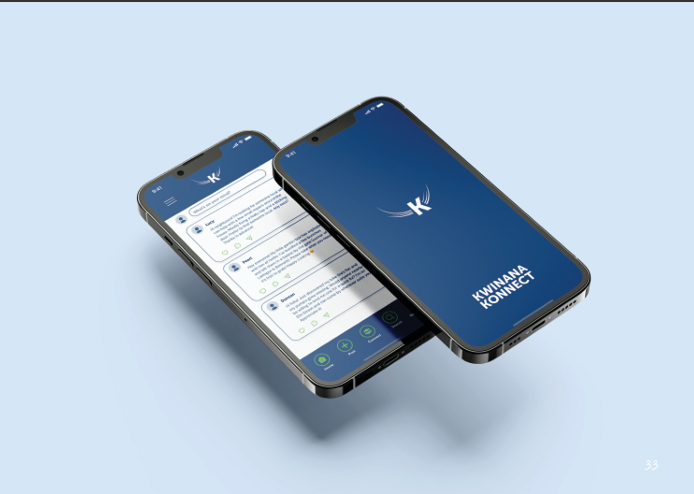
A major concern for our team was how we could encourage Street-by-Street attendees to sustain their new connections over time. While the pop up event presents a good opportunity for meeting your neighbours and starting the foundation of connection, ensuring connections are strengthened over time instead of fizzling out is important to address.
Kwinana Konnect, our proposed app concept, would allow residents to connect with each other on a localised social media platform. As well as a feature that helps residents find local handymen and advertise local events, our app would help residents build relationships with their neighbours. The app will give users positive reinforcement when they connect or reconnect with a neighbour. When a connection is made or you reconnect with a neighbour, you’ll be able to tap your phones together and earn points. The app could also present another opportunity for the council to connect with constituents more easily.
Overall, this app would help build a friendlier and more resilient community, encouraging residents to create and maintain relationships to increase their sense of connection, well-being, and safety.
BLOOD BLOOMERS
In 2022 and 2023 Murdoch University partnered with Project Hiu, a not-for profit organisation that aims to provide an alternative income to fishermen in one of the largest shark fisheries in Indonesia. The partnership led to great projects being initiated to help the community and attract tourism to the area. However, the initial research conducted for Project Hiu against shark fishing led to an exploration of interconnected issues by the postgraduate design thinking students such as access to food, water security, education, womens health, healthcare, infrastructure, waste management and income were all factors that led to the community to rely heavily on the shark fishing industry.
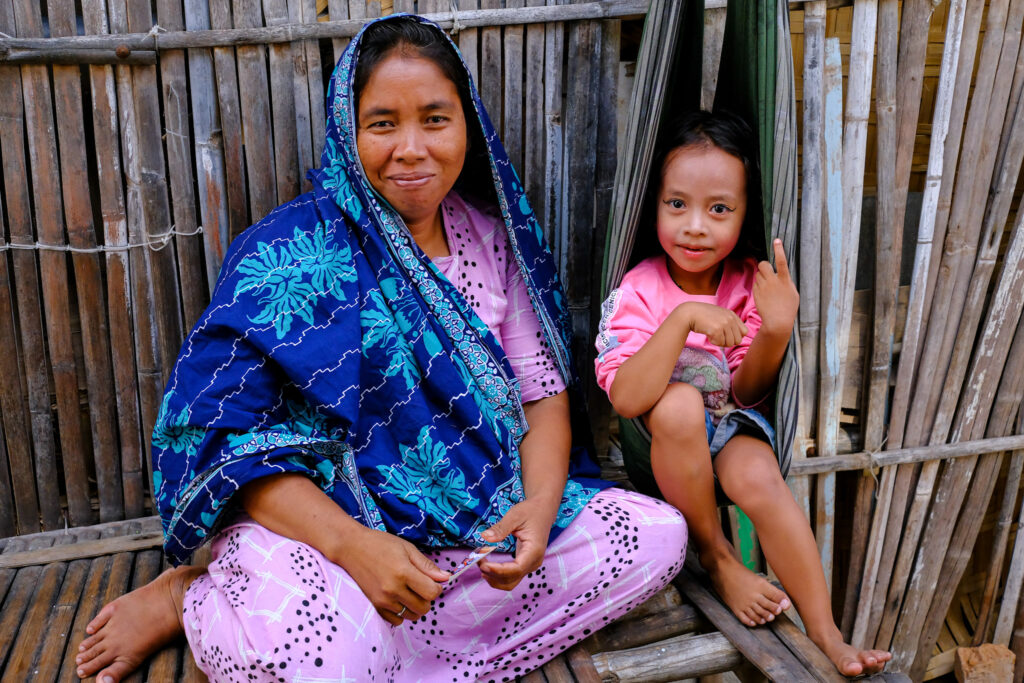

During the research expeditions there were many moments when Erica, Nikki, and Sophie, those on the 2022 research team, shared moments with the community on Maringkik Island. A small island located 5km from Tanjung Luar, a market where many husbands, brothers, and sons are working to provide for their families trading and selling the sharks they catch.
One small act became the spark for something bigger. When Erica brought reusable pads back for a woman she had befriended on the island, the gesture opened up conversations about dignity, health, and resilience. That moment inspired a team of five to begin working alongside the women of Maringkik to improve access to menstrual health products, waste disposal solutions, and reproductive health education
OUR VISION
TO FACILITATE GROWTH AND BUILD RESILIENCE INREMOTE COMMUNITIES
BY EXPANDING FUTURE OPPORTUNITIES
TEAM MEMBERS

THE PROJECT
BY COLLABORATING WITH MENSTRUATORSOF MARINGKIK ISLAND, WE AIM TO IMPROVE MENSTRUAL HEALTH AND EXPAND CHOICES IN REPRODUCTIVE HEALTH THROUGH SUSTAINABLE OPTIONS AND EDUCATION.
WHAT THEY FOUND
- Maringkik is one of many coastal communities that rely heavily on income from shark fishing.
- Research revealed a web of interconnected challenges, such as limited economic alternatives, environmental pressures, and lack of infrastructure, that contribute to this dependency.

WHY IS THIS IMPORTANT?
GLOBALLY, OF THE 1.9 BILLION PEOPLE WHO MENSTRUATE, APPROXIMATELY 500 MILLION CANNOT ACHIEVE THE GLOBALLY RECOGNISED MENSTRUAL HEALTH AND HYGIENE STANDARDS
This project supports the following United Nations
Sustainability goals;
- Goal 3: Good Health and Well-being;
- Goal 4: Quality Education;
- Goal 5: Gender Equality;
- Goal 6: Clean Water and Sanitation;
- Goal 10: Reduced Inequalities;
- Goal 11: Sustainable Cities and Communities;
- Goal 12: Responsible Consumption and Production;
- Goal 13: Climate Action;
- Goal 14: Life Below Water, and;
- Goal 17: Partnerships for the Goals.
Together, these goals reflect our mission to deliver health, equity, and sustainability outcomes both above and below the surface in partnership with the Maringkik community and Project Hiu.
WHEN WE IMPROVE MENSTRUAL EDUCATION AND ACCESS, WE’RE NOT JUST DELIVERING PRODUCTS, WE’RE IMPROVING DIGNITY, AGENCY, AND OPPORTUNITIES FOR FUTURE GENERATIONS




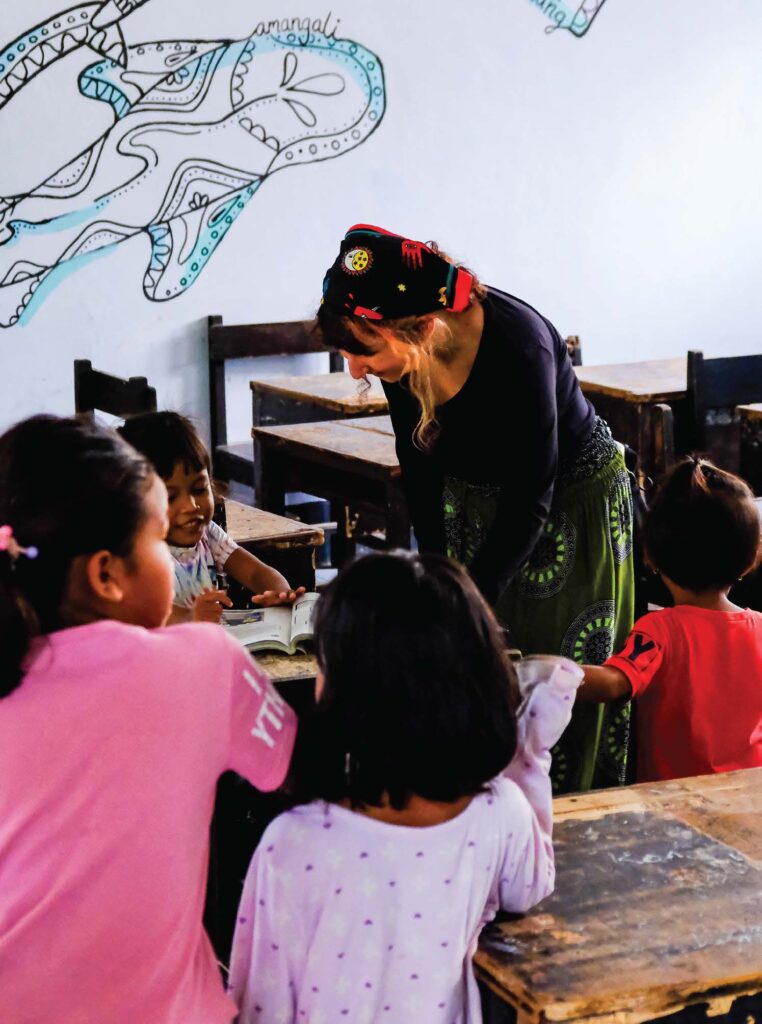
INTERVIEWS WITH MARINGKIK WOMEN
MENSTRUAL HEALTH EDUCATION ON MARINGKIK IS ALMOST NON EXISTENT, WITH MINIMAL REPRODUCTIVE CHOICE AND ACCESS TO SANITARY PRODUCTS.
KEY INSIGHTS
This interview took place before we began the rest of our research. After speaking with the interviewee and hearing from Madison that local fishermen were now asking for menstrual education for their daughters and families, it became clear that there was still strong interest in this project. These conversations confirmed that the community was ready to engage, and that once we had established the foundation of the project, we could begin co-designing the education materials in collaboration with the community itself
- Education often begins too late, causing fear and confusion when menstruators start their first period.
- Cultural and religious beliefs influence disposal methods and restrict behaviours, and this improper disposal remains an environmental concern.
- Social stigma is decreasing, but more education is needed for lasting change


OUR GOAL
TO CREATE MENSTRUAL EDUCATION AND PROVIDE INTERIM RELIEF FOR MENSTRUATORS ON MARINGKIK
TO BEGIN THE JOURNEY
To accomodate our mission and reach our goal we’ll need:
- The tools necessary to promote and distribute menstrual education
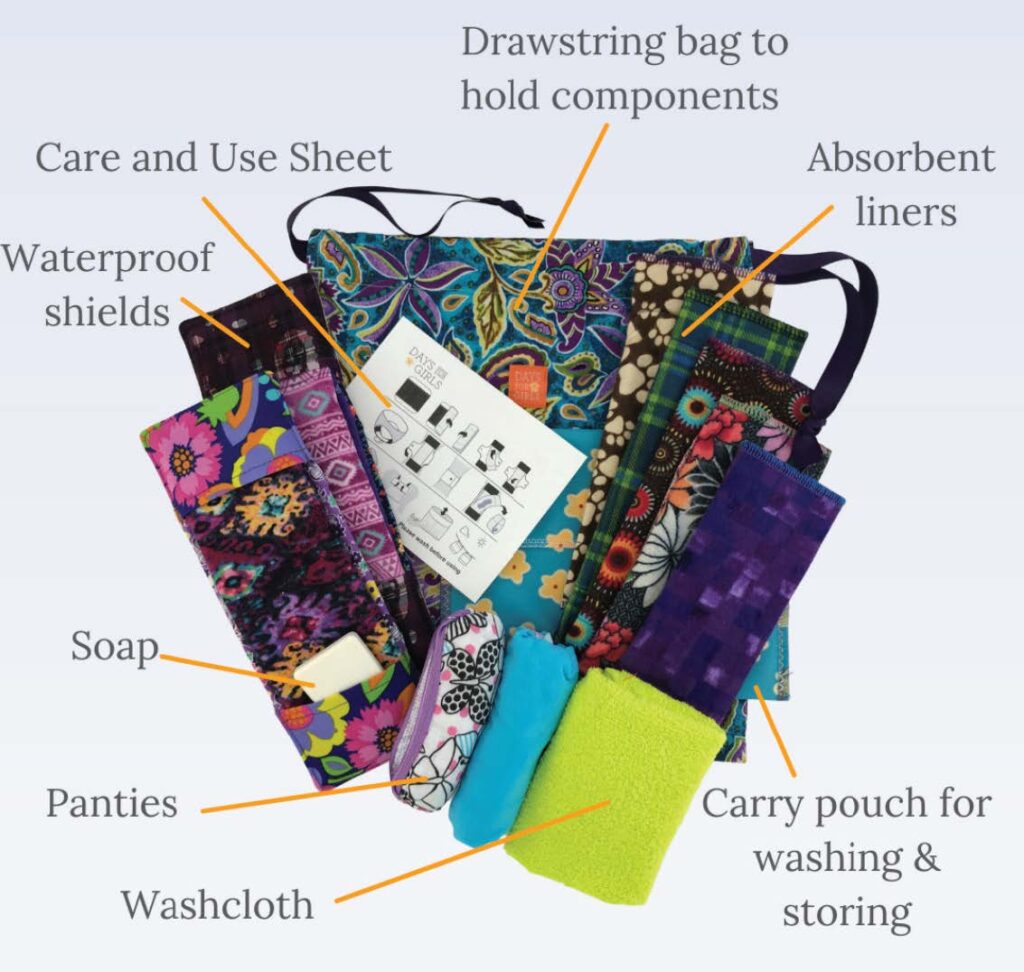
- Resources such as reusable period underwear to aid the community and reduce up to ~1 tonne of waste per year
- To finance a trip to Maringkik to distribute the resources and tools necessar
WE WANT TO PROVIDE 900 KITS TO ACCOMODATE THE COMMUNITY ON MARINGKIK
Days for Girls is a global nonprofit organisation dedicated to improving menstrual health. They provide sustainable menstrual kits, education, and advocacy to break the cycle of period poverty
THE DAYS FOR GIRLS KIT